HVAC Technician Training at South Texas Vocational Technical Institute
- Hands-on labs covering AC systems, heating, refrigeration, and electrical controls
- Training designed to prepare you for the EPA Section 608 Technician Certification*
- Supportive training environment with instructors who have real industry experience

Your Trades Career Training
Starts Here

"*" indicates required fields
- Hands-on labs covering AC systems, heating, refrigeration, and electrical controls
- Training designed to prepare you for the EPA Section 608 Technician Certification*
- Supportive training environment with instructors who have real industry experience
YOUR MOMENT IS HERE.
YOUR MOMENT IS HERE.
Your HVAC Training Starts Here
At STVT, we’re in the business of building futures. Our Heating, Ventilation, Air Conditioning, & Basic Refrigeration program gives you the hands-on training and career-focused skills to pursue a new path in the HVAC and Basic Refrigeration repair field, without a four-year commitment or years of general education requirements.
HVAC & Basic Refrigeration Program Overview
The HVAC & Basic Refrigeration diploma program at South Texas Vocational Technical Institute (STVT) prepares you for entry-level opportunities across commercial and residential HVAC maintenance. Designed specifically for hands-on, career-driven students, our curriculum combines classroom instruction with applied lab training that helps you develop job-ready skills, taking you from basic system design to advanced diagnostics and repair.
STVT has helped South Texas students train for new careers for over 50 years. Our hybrid HVAC & Basic Refrigeration diploma program features 800 total instructional hours split evenly between theory and hands-on application:
- 400 Classroom Hours: Learning mechanical principles, electrical schematics, and industry compliance.
- 400 Hands-On Lab Hours: Working directly with trade tools, troubleshooting real equipment, and building field-ready confidence.
At a Glance
Program Length
10 months (50 credit hours / 800 instructional hours)
Credential
Diploma
Format
Hybrid (Online Coursework + On-Campus Hands-On Labs)
Core Coursework & Practical Skill Training
Our curriculum is built around the core topics evaluated on industry certification exams, including the EPA Section 608 Technician Certification* and NCCER standards.
| Focus Area | Hands-On Skills & Equipment Coverage |
|---|---|
| Air Conditioning & Heat Pumps | System diagnostics, airflow troubleshooting, metering devices, and servicing heat pump systems and air handlers. |
| Electrical Systems & Controls | Reading electrical schematics, testing circuitry, low-voltage wiring, and diagnosing mechanical controls and relays. |
| Heating Systems | Operation, installation, and safety troubleshooting for residential and commercial heating equipment. |
| Basic & Commercial Refrigeration | Hands-on work using basic refrigeration cycle demonstrators, domestic refrigerators, walk-in units, and commercial refrigeration equipment. |
| EPA Compliance & Safety | EPA Section 608 guidelines, Clean Air Act rules, proper refrigerant handling/recovery, and tool safety. |
Hands-On HVAC Training & Lab Experience
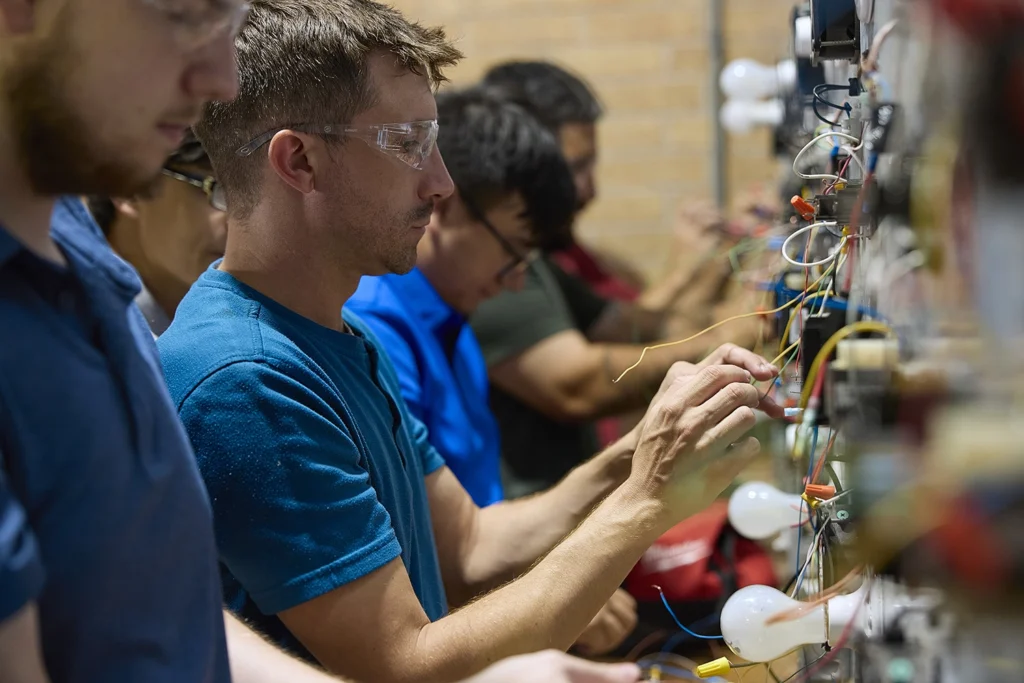
Theory only takes you so far; real skill is built in the lab. At STVT, you spend 400 of your 800 total program hours in supervised, fully equipped trade labs, moving past textbooks to work directly with active equipment.
Tools & Equipment You Will Train On
Utilize digital multimeters, manifold gauge sets, vacuum pumps, leak detectors, and brazing torches.
Work directly on residential split systems, heat pumps, gas furnaces, and package units.
Practice recovery, evacuation, and charging on basic refrigeration cycle demonstrators, walk-in coolers, and commercial refrigeration rigs.
Rather than just watching demonstrations, you will independently troubleshoot live faults introduced by instructors, diagnose electrical failures, locate refrigerant leaks, clear clogged lines, and test system pressure under real operating conditions.
Is HVAC Trade School Right for You?
Most people starting out in heating, air conditioning, and refrigeration begin with either hands-on trade school training or an entry-level apprenticeship. Here’s how to know if HVAC trade school is the right starting point for you.
Who HVAC Trade School Is Best For
- Applicants with Zero Prior Experience: If you have never touched an HVAC system, trade school provides entry-level readiness. STVT graduates leave with foundational tool safety knowledge, schematic-reading skills, and EPA certification prep.
- Adult Learners & Career Changers: If you’re ready for a new career, the 10-month hybrid HVAC program gives you a direct way to build skills and pursue industry credentials, without committing to years of general education courses.
- People Without Industry Connections: Apprenticeships are frequently awarded to family or personal acquaintances of existing technicians. Formal trade school provides an independent, merit-based entry point. STVT’s career services team offers career search support to help you connect with employers after graduation.
- Learners Who Want a Safe Space to Practice: In an HVAC diploma program, you learn by doing on lab equipment. You can practice complex wiring and refrigerant recovery under industry-experienced instructors before working on live customer systems.
Who HVAC Trade School Isn’t the Best Fit For
- People Who Want to Start Earning Right Away: If you already have a confirmed apprenticeship or entry-level opening with a licensed contractor lined up, an apprenticeship’s day-one wage may make more sense than enrolling in a diploma program first.
- Learners Who Prefer to Train Entirely On the Job: Some people learn best working directly under a licensed technician in real job-site conditions, rather than in a structured classroom and lab setting.
- Applicants Not Ready to Commit to a Set Schedule: STVT’s HVAC program runs on a defined 10-month timeline. If your schedule can’t accommodate that before you start working, an apprenticeship may be the better starting point.
Industries and Jobs That Hire HVAC Technicians
Graduates of STVT’s HVAC & Basic Refrigeration program are prepared to pursue entry-level opportunities across a range of employers, including:
- Residential HVAC service and installation companies, the businesses keeping homes in South Texas comfortable through scorching summers and cool winters
- Commercial HVAC contractors, firms that service offices, restaurants, retail centers, and large commercial facilities
- Property management and facilities teams, organizations that use in-house technicians to maintain HVAC systems across apartment complexes, hospitals, and commercial buildings
- Industrial and manufacturing operations, facilities where climate control and refrigeration systems keep production running
Entry-Level Jobs Graduates May Pursue
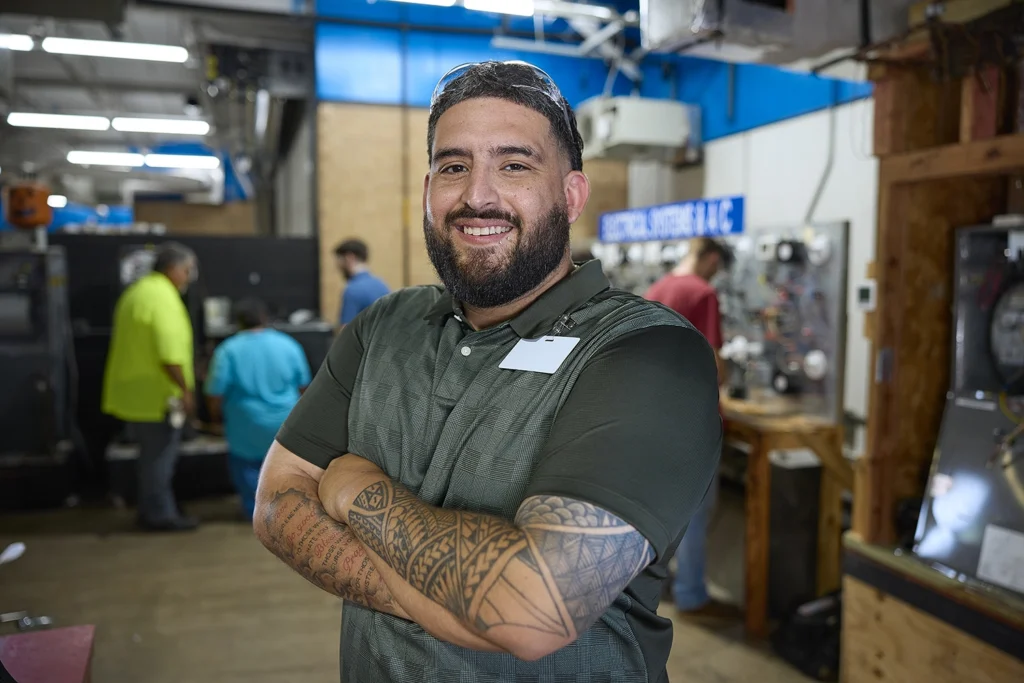
HVAC Apprentice · HVAC Helper · HVAC Installer · HVAC Technician · Maintenance Technician · Service Technician
*STVT cannot guarantee employment or salary. The jobs listed are examples of potential entry-level positions, not a representation that these outcomes are more probable than others.
Ready to Enroll?
How STVT’s HVAC Program Prepares You For Certifications & Texas Registration
The HVAC & Basic Refrigeration program at STVT is designed to prepare you for two credentials that HVAC employers across Texas and the country look for in entry-level candidates.
Built-In EPA Section 608 Preparation: STVT’s curriculum directly aligns with EPA Section 608 guidelines, integrating core test prep into your coursework so you graduate prepared to sit for your certification exam.
STVT’s HVAC program is built around the core skills and standards that NCCER (National Center for Construction Education and Research) credentialing evaluates. Completing this program prepares you to pursue NCCER credentialing after graduation.
Working in Texas: TDLR Registration: Texas requires HVAC technicians to register with the Texas Department of Licensing and Regulation (TDLR) as an Air Conditioning and Refrigeration Technician and to work under the supervision of a licensed ACR contractor. Registration currently costs $20 and renews annually. After two years of supervised experience, technicians can pursue TDLR’s Certified Technician designation.
*South Texas Vocational Technical Institute (STVT) does not guarantee third-party certifications. Certification requirements for taking and passing certification examinations are not controlled by STVT but by outside agencies and are subject to change by the agencies without notice to STVT. Therefore, STVT cannot guarantee that graduates will be eligible to take certification examinations, regardless of their eligibility status upon enrollment.
Investing in Your Future: HVAC Program Cost & Financial Aid
Investing in a skilled trade is an important step toward a rewarding career, and STVT is committed to making your education affordable and accessible.
To help lower your out-of-pocket expenses, qualified students can access financial aid options, including federal Pell Grants, student loans, and scholarships that do not have to be paid back. Additionally, eligible military members and veterans can apply VA education benefits to help fund their training.
*Exact campus figures can be found in your local school catalog. Third-party testing fees, including the EPA Section 608 exam, are separate. Financial aid, grants, and military benefits are subject to individual eligibility requirements. Military and veteran education benefits are administered by the U.S. Department of Veterans Affairs and branch-specific programs, not STVT. Financial aid is available for those who qualify.

Find HVAC Training Near You
STVT offers HVAC & Basic Refrigeration training at five campuses across Texas.
*Programs vary by location
Arlington
-

2241 S Watson Rd,
Suite 181, Arlington, TX 76010 -

682-284-0990
-

CDL Training: Class A Tractor Trailer, CDL Training: Class B, Diesel Heavy Truck Technician, Electrical, Heating, Ventilation, Air Conditioning and Basic Refrigeration, Medical Clinical Assistant
Brownsville
-
1900 N Expressway, Suite O
Brownsville, TX 78521 -
956-322-4831
-
CDL Training: Class A Tractor Trailer, Dental Assisting, Electrical, Heating, Ventilation, Air Conditioning and Basic Refrigeration, Medical Billing & Coding, Medical Clinical Assistant
Corpus Christi
-
2000 S Padre Island Dr
Corpus Christi, TX 78416 -
361-360-4168
-
Automotive Service Technician, CDL Training: Class A Tractor Trailer, Combination Welding, Dental Assisting, Heating, Ventilation, Air Conditioning and Basic Refrigeration, Medical Clinical Assistant
McAllen
-
1800 S Main, Suite 500
McAllen, TX 78503 -
956-322-4790
-
Automotive Service Technician, CDL Training: Class A Tractor Trailer, Electrical, Business Studies, Heating, Ventilation, Air Conditioning and Basic Refrigeration, Dental Assisting, Medical Billing & Coding, Medical Clinical Assistant
San Antonio
-
734 SE Military Dr, San Antonio, TX 78214
-
210-998-1802
-
Heating, Ventilation, Air Conditioning and Basic Refrigeration, Automotive Service Technician, Combination Welding, CDL Training: Class A Tractor Trailer, Diesel Heavy Truck Technician
HVAC Program Questions Worth Asking
No. STVT provides access to the HVAC equipment and tools used for training as part of the program. You show up ready to learn, the lab provides the rest.
HVAC training requires appropriate safety gear. Contact your campus admissions team for specifics on what’s provided and what you’ll need to bring. Requirements can vary by campus.
Many STVT students work while they train. The program is designed with working adults in mind. Talk to your campus about available class schedules so you can find an option that fits your life before you enroll.
Life happens. If you run into a conflict, reach out to your instructor or student services team as early as possible. STVT has support staff to help you work through scheduling challenges, so you’re not on your own.
STVT offers career services support to help graduates with job searching, resume preparation, and connecting with potential employers. We’re in the business of helping students start new careers. That support doesn’t stop at graduation.
Experienced HVAC technicians started somewhere. What this program offers you is documented, structured training covering system design, heating, AC, refrigeration, and EPA Section 608 preparation, which gives an employer something concrete to evaluate. Walking in with hands-on lab hours and a credential path behind you can put you in a much stronger position than someone who just claims they can do the work.
HVAC stands for Heating, Ventilation, and Air Conditioning. HVAC/R adds Refrigeration to that scope. STVT’s program is titled HVAC & Basic Refrigeration, so you train across the four areas, which makes you more versatile and prepares you for a broader range of entry-level jobs.
In Texas, HVAC technicians are required to register with the Texas Department of Licensing and Regulation (TDLR). This is separate from the contractor license required to run an HVAC business. This program is designed to prepare you for entry-level technician roles, giving you the foundational skills and EPA Section 608 certification preparation that support your path toward TDLR registration as a technician. Registration requirements are set by the state and are subject to change. Contact TDLR directly for the most current requirements.
A diploma. STVT’s HVAC & Basic Refrigeration program awards a diploma upon completion, not a certificate.
No. STVT’s program is intended for students with a high school diploma, GED, or recognized equivalent. Texas requires technicians to register with TDLR, not to hold a degree. See Working in Texas above.
Ready to Start Building Your Future?
STVT has the tools to help you get there. Talk to an admissions advisor at your nearest campus. They’ll walk you through the program, let you know when the next start date is, and connect you with the Financial Aid team to answer your questions about cost and financial aid.
No pressure. No obligation. Just honest information from a team that’s been helping South Texas students build new careers for over 50 years.